Our Time to Rise: A Call to the Unbroken.
Freedom without virtue and courage is an illusion.
Support our mission

Lex Libertas' open letter to Minister Ronald Lamola
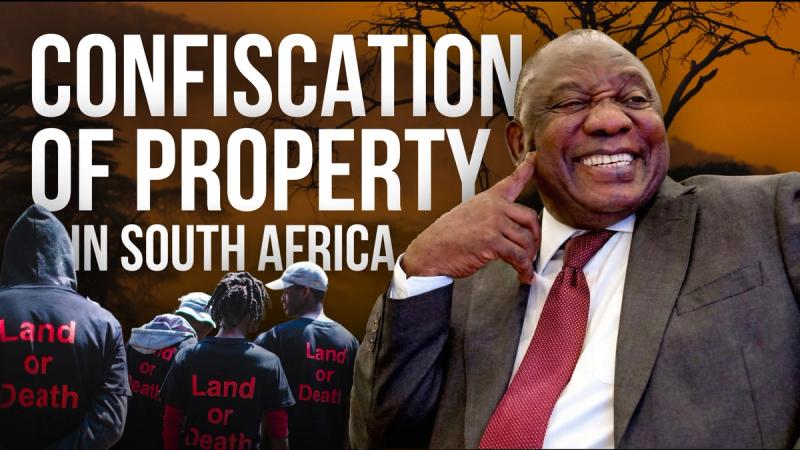
OPEN LETTER TO MINISTER RONALD LAMOLA
From Dr Ernst Roets
Executive Director
Lex Libertas
8 December 2025
Dear Minister Lamola,
Your recent response to U.S. Secretary of State Marco Rubio — in which you rejected concerns about minority persecution in South Africa — highlights a serious and recurring problem in the discourse regarding South Africa. Instead of engaging with substantive issues affecting the various communities within the country, the South African government routinely dismisses legitimate warnings as “misinformation” or politically motivated attacks. This pattern has become predictable, but no less damaging.
You assert that there is no evidence of targeted mistreatment, citing certain statistics as proof. I am sure you would agree that it is possible to make virtually any political point through a selective use of statistics. This is because no single dataset can measure the full picture of systemic failures, policy-driven discrimination, collapsing state capacity, or the lived experience of vulnerable communities. Crime figures alone do not capture the impact of racialised legislation, ideological hostility, institutional decay, or years of state neglect in rural and minority communities. To suggest that these issues do not exist is not only inaccurate — it is irresponsible.
The undeniable truth remains that South Africa is not confronted with one problem. We face multiple, interconnected crises. These include, but are not limited to:
These are not separate incidents coincidentally occurring at the same time. Together, they expose a political order that is faltering at its foundations — a reality that international partners are increasingly acknowledging.
It is sad to witness a recurring pattern among members of the South African ruling elite and a selection of media outlets and commentators ideologically aligned with its objectives, in which these valid concerns are repeatedly and aggressively swept under the carpet with the mere claim that there is “no white genocide” in South Africa — as if the existence of genocide is the only factor by which one may conclude whether a crisis exists.
It is in this context that government leaders, including yourself, have developed the unfortunate habit of accusing critics of being “unpatriotic” or “attacking the country.” But Minister, our position is shaped by lessons drawn directly from the ANC’s own history. The ANC did not merely criticise the white minority government — it called for sanctions, boycotts, international pressure, and civil disobedience, all in the name of what it believed was justice. What civil society voices in South Africa are doing today is modest by comparison. If the ANC could justify such campaigns in the past, it should not be surprising that citizens today raise their voices when constitutional rights, community safety, and fundamental freedoms are under threat.
The underlying issue here is that criticisms of the ideology of the ruling elite are presented as a lack of patriotism, when the truth of the matter is that it is that very ideology that has caused so much destruction in this beautiful country.
Minister Lamola, you need to understand that South Africa is moving toward a similar moment of reckoning. The current trajectory is by no means sustainable. If the government remains unwilling to address these crises honestly, the scale and intensity of campaigns — both inside the country and internationally — will only increase.
In the immediate term, several practical interventions are urgently required. These include:
With all of that said, it should be stressed that even these interventions, vital as they are, will not resolve the root problem. This is because these interventions would, at best, serve to address the symptoms of a deeper-rooted crisis.
The central issue is structural. South Africa’s highly centralised political model concentrates excessive power in a national government that is neither capable nor accountable enough to wield it. This has been true under the ANC, it was true under the National Party, and it was true under the British colonial administration. Even though the current South African dispensation is frequently presented as the antithesis of the National Party’s white minority government, the similarities remain striking: a centralised state ruling over a vast and diverse society on a racial basis. This approach is destined for periodic failure.
On top of this, our reality is worsened by the fact that the ruling elite maintains its belief that the destructive ideological combination of race-nationalism and socialism will improve prosperity — despite overwhelming evidence to the contrary.
What South Africa truly needs is meaningful decentralisation and genuine self-governance for its communities. This is not ideological; it is practical. One might go further and say that it is anti-ideological, because it recognises that self-governance is as natural as human nature itself — unlike the abstract theories currently imposed in the name of prosperity and equality.
Around the world, diverse societies characterised by deep friction have stabilised themselves through federal, cantonal, and other community-based models that disperse power, enhance accountability, and allow people to manage their own affairs.
To contribute constructively to this debate, Lex Libertas will soon release a series of detailed public reports documenting the extent to which minority communities are being marginalised, targeted, and exposed to systemic vulnerability. These reports will include trend data, case studies, legal analysis, community testimonies, and a register of public statements by public officials. This series will be followed by a set of practical steps that could be taken toward a more viable political order for the various nations that inhabit South Africa.
We would welcome the opportunity to discuss these matters with you directly. South Africa cannot move forward through denial. It requires courage, accountability, and structural reform. Lex Libertas stands ready to engage — openly, respectfully, and based on evidence.
Sincerely,
Dr Ernst Roets
Lex Libertas is a think tank and advocacy group working towards a viable political dispensation in South Africa, based on the principles of freedom, decentralisation, and self-governance.
To support Lex Libertas, click here.
Explore more content on similar topics
Freedom without virtue and courage is an illusion.
The Afrikaner Dream is not dead. It lives.
The only empowerment that endures is earned, not engineered.