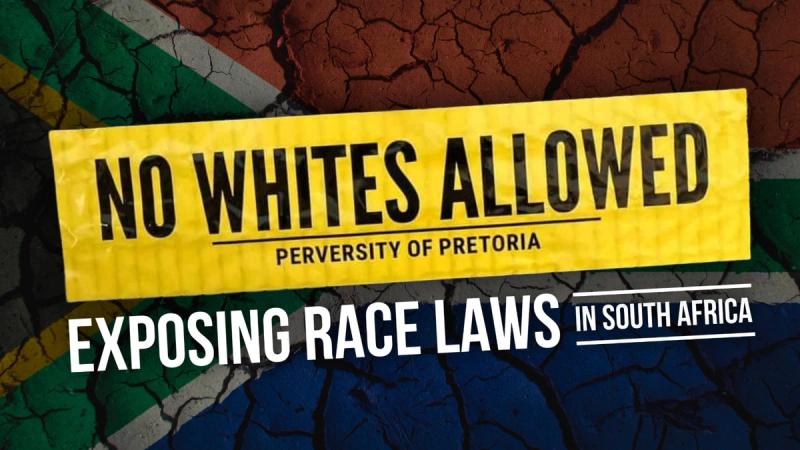
The post-1994 era in South Africa was heralded as a triumph of non-racial democracy, yet the persistence and expansion of race-based legislation has undermined this ideal. Rather than dismantling the racial classifications inherited from the apartheid system, successive governments have entrenched them through a proliferating framework of laws and policies that explicitly discriminates against minorities on the basis of race. These measures, primarily justified under the banner of redress as a result of historical injustices, have instead institutionalised a new form of systemic discrimination against minority groups—particularly white, coloured, and Indian South Africans—by imposing barriers to employment, economic participation, and property rights.
South Africa now has more race-based laws than at the height of apartheid. By 2025, estimates place the number of operative statutes, regulations, and policies referencing race at over 145, with the majority introduced since 1994. This represents a continuation and intensification of racial engineering, where the state classifies citizens into categories—black, coloured, Indian, and white—to allocate opportunities, often to the exclusion or disadvantage of non-black groups.
Central to this framework is the Broad-Based Black Economic Empowerment (B-BBEE) Act, which proclaims to promote the economic empowerment of black people, including women, youth, workers, people with disabilities, and rural communities, through strategies such as increasing ownership and management of enterprises, skills development, equitable workforce representation, preferential procurement, and targeted investment. Complementing this is Affirmative Action (AA) under the Employment Equity Act (EEA), which mandates measures to ensure that suitably qualified people from designated groups—primarily black, coloured, and Indian individuals, as well as women and people with disabilities—have equal employment opportunities and equitable representation across all occupational levels.
Redress Rebranded: How Racial Control Is Marketed as “Equality”
These regulations may appear benign or even progressive at first glance, but they mask race-based rules with terms like “redress” and “equal opportunity.” By framing racially exclusionary policies in democratic language, the ANC government maintains international support while enforcing internal control. Labeling race-based regulations as “fair” is akin to claiming North Korea is democratic because it calls itself the “Democratic People’s Republic of Korea.” While the EEA explicitly allows numerical goals but excludes quotas, the reality of B-BBEE implementation often demands specific targets, such as 30% black ownership in businesses, depending on employee numbers and turnover. Failure to comply does not always result in direct criminal penalties, but the government uses indirect mechanisms to enforce adherence, disproportionately burdening minority-owned enterprises and limiting their economic viability.
Compliance by Coercion: How B-BBEE Is Enforced
B-BBEE operates via a scorecard system for certification, where small- to medium-sized companies incur annual audit costs ranging from R10,000 to R30,000. It has been estimated that Broad-Based Black Economic Empowerment (B-BBEE) and Affirmative Action impose annual compliance costs of R145–290 billion, equivalent to 2–4% of GDP, and have contributed to a cumulative economic drag exceeding R5 trillion since their inception.
Non-compliance leads to exclusion from government contracts, tenders, and supplier databases, as well as reputational damage that can deter clients and investors. Entities misrepresenting compliance face fines up to 10% of annual turnover, criminal prosecution, or imprisonment for up to 10 years. Re-audits, if required, can cost between R50,000 and R300,000, further straining minority-led businesses that may not qualify for preferential treatment.
While B-BBEE's stated intent is to redress historical injustices, it has often exacerbated inequalities, particularly for minorities who face de facto exclusion from opportunities reserved for designated groups.
Empowerment for the Political Elites at the Expense of the Populace
Polls from the Institute of Race Relations indicate that only about 15% of black South Africans have reported benefiting from B-BBEE, leaving over 85% unaffected. Meanwhile, South Africa's unemployment rate, using Stats SA's expanded definition, has risen from approximately 31.5% in 1994 to 43.1% in 2025, highlighting the policy's failure to drive broad economic inclusion. Despite calls from business lobbies, advocacy groups, and economists to scrap B-BBEE, the ANC has pushed for stricter enforcement. Eustace Davie, Director of the Free Market Foundation, has stated: “Corruption in South Africa has not grown by accident. It has been made possible by law. The policy of Black Economic Empowerment, presented as a means of redress, has in practice become the legal and moral cover for large-scale theft.”
Public criticism of race-based policies has grown across racial lines. Professor William Gumede has noted that “BEE only benefits a very small group of politically connected… the same people empowered again and again…” and described it as “state-sanctioned looting under the guise of empowerment.” Yet, ANC Deputy President Paul Mashatile, in a 2025 National Council of Provinces session, hailed B-BBEE's “transformative success” and insisted it “is not a failed policy. In fact, I think it must be implemented more rigorously.” When pressed on its failures and economic impediments, Mashatile equated scrapping B-BBEE with “going back to apartheid.”
Race Policy Beyond the Economy
Racial quotas under AA have extended beyond economics into nearly every societal sphere, often marginalising minorities. In 2019, South African Schools Athletics (SASA) issued a memo requiring “at least 40%” of district, provincial, and national primary- and high-school athletics teams to comprise “players of colour.” Although withdrawn amid backlash, the broader sports transformation framework persists under national oversight bodies. In 2012, the Jacaranda Children’s Home in Pretoria lost corporate support because 70% of its orphans were white, failing to meet B-BBEE criteria for funding. In 2023, the Department of Water and Sanitation proposed draft regulations tying water-use licences to minimum black shareholding thresholds of up to 75%, drawing outrage from agricultural communities already facing resource constraints. In 2024, the IRR sought a meeting with the South African Human Rights Commission to address the surge in race laws, noting 141 racialised Acts of Parliament in operation—up from 52 in 1996. Campaign Manager Makone Maja stated: “Simply put, there have never been as many race-based laws, regulations and directives in South African history than today, not even at the peak of apartheid.”
During the implementation of the apartheid policy, the ANC led the fight against racial segregation. Walter Sisulu, a prominent ANC leader, declared: “The fundamental principle in our struggle is equal rights for all in our country, and that all people who have made South Africa their home, by birth or adoption, irrespective of colour or creed, are entitled to these rights.”
The ANC’s Betrayal of Its Own Principles
The ANC’s shift toward racialised policies has drawn sharp criticism.
In 2023, the current Executive Director of Lex Libertas, Dr Ernst Roets (at the time Chief Strategy Officer at AfriForum) concluded: “It is now clear the ANC’s critique of race laws before 1994 was only a power move and not a genuine condemnation of race discrimination. The ANC called apartheid a crime against humanity due to race laws, expropriation of property, and double standards with regard to freedom of belief and freedom of speech. Now they’re violating all these things they once claimed to champion.”
Whether affecting everyday workers, business owners, farmers seeking drought relief, aspiring athletes, or orphans, the ANC government’s fixation on race spares not a single person in South Africa, perpetuating division and disadvantaging minorities in a system that prioritises racial metrics over merit and equality.