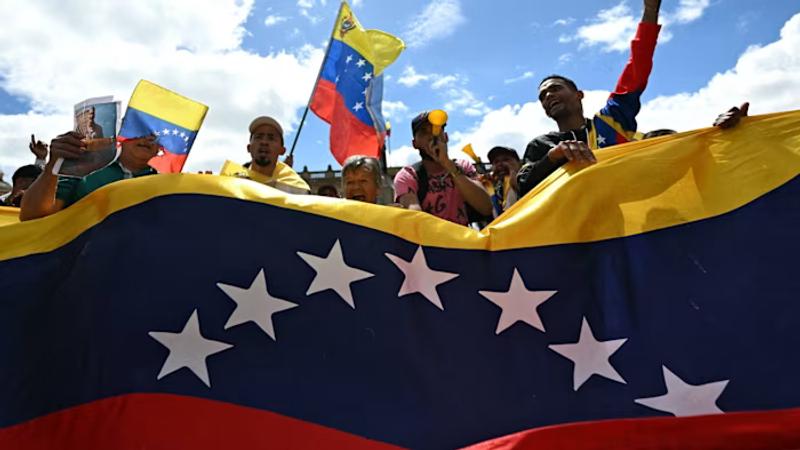
The US invasion of Venezuela in January 2026 – with the capture of President Nicolás Maduro and his wife, and their extradition to New York for trial on drug trafficking charges – is not simply an isolated incident. It is the latest in a series of indications that the world order as we know it – and the rules that underpin it – is undergoing profound change. The early signs are already there that the long-term viability of the Westphalian system, which presupposes the sovereignty of states and lays down certain rules of international law, should not be taken for granted. This system, standardized in the 20th century by international norms and institutions such as the UN Charter, is becoming increasingly irrelevant. Power and interests now outweigh procedures, and sovereignty is no longer absolute, but conditional – dependent on the balance of power. This is not the “end of the West” as some analysts claim, but perhaps the end of an era where rules are self-evident.
For decades, countries, including South Africa, have comforted themselves with the illusion of a rules-based international order. International law, multilateral institutions and formal procedures were supposed to constrain power politics, with “checks and balances” to restrain even the greatest powers. But this assumption is increasingly being exposed as a myth. Law without power is worthless; the Cartesian idea of proceduralism – the belief that the right process necessarily ensures the right outcome (with reference to the seminal work of the Enlightenment thinker, René Descartes, A Discourse on Method)– collapses when there is no consensus on the process, when it is not in the interest of powerful parties to abide by the rules, or simply when the process does not take into account reality. In such a world, capacity and action outweigh texts, declarations, and formal processes.
The South African government’s response to the Venezuela invasion illustrates not only this myth, but also the blatant hypocrisy of the South African government. The Department of International Relations and Cooperation (DIRCO) was quick to respond with the kind of rhetoric we are all familiar with: an appeal to the UN Charter, international law, state sovereignty, the principle of non-interference and a condemnation of unilateral actions. This sounds technically correct, but strategically it is close to meaningless, because without the ability to enforce it, rules mean little.
South Africa likes to speak the language of principles, such as President Ramaphosa’s statements on the Palestinians’ right to self-determination and the case against Israel at the International Court of Justice, which he says are “matters of principle.” Yet these “principles” are deployed very selectively: they are passionately defended when they fit anti-Western narratives, and blatantly ignored when they affect the government’s own agendas or ideological biases.
This legal cherry-picking is particularly harmful to the diverse communities and peoples within South Africa, who already suffer from destructive policies, state failure and inflammatory statements.
Here are some examples of actions and positions by the South African government that clearly contradict the strong statement it just made regarding Venezuela and the USA:
- In 1998, under the leadership of Nelson Mandela, South Africa intervened militarily in Lesotho after disputed elections and instability, without universal multilateral consensus. The intervention was justified under the banner of "order" and "necessity", not (as now) rules and procedures.
- In 2015, South Africa refused to arrest Omar al-Bashir despite binding obligations under the International Criminal Court (ICC). The government even tried to withdraw from the ICC, arguing that sovereignty and political considerations take precedence over international procedures.
- Even in domestic affairs, we see the same pattern. Affirmative action, which according to international labour law must be temporary and measurable, has been made permanent in South Africa without a sunset clause or clear measures of success.
- Add to this the reckless statements of government representatives, which seem to be never-ending… In 2018, the South African ambassador to Venezuela declared that South Africa was ready to take up arms against the US to defend Venezuela and even said that, if the people of Venezuela were to die because of American intervention, South Africa would ensure that they “did not die alone”.
- This past week, a senior DIRCO official declared on social media that he found nothing wrong with the idea that South Africa should develop nuclear weapons to build power against the US – an almost unimaginably dangerous statement.
These actions and statements are not merely rhetorical; they contribute to a climate of instability, where destructive policies, state collapse and the persecution of minorities particularly affect groups such as the Afrikaners.
The South African government therefore appeals to a rules-based order when great powers act, but its own history shows that it has long understood that rules without power do not mean much.
This brings us to the core question that this moment opens up for South Africa: what does a country, and more importantly, what do communities in a diverse country like South Africa, do in a world where the capacity of international institutions to intervene is crumbling? If international guarantees become selective and unpredictable, we need to ask ourselves how resilience is built locally.
Self-government, decentralization and institutional capacity are not ideological thought exercises in this changing world. They are a necessary adaptation strategy. It is, viewed negatively, an important means of spreading risk when central promises fall flat. But viewed positively, self-government is an inalienable right that is inherent in every community, regardless of what the constitution or the United Nations says about it. If it is recognized in the constitution and by international law, that is good. However, if it is denied, it simply means that the documents that prescribe it are increasingly irrelevant - not simply because we do not like it, but because an inalienable right that is as old as human nature itself cannot simply be denied by some modern rule.
Therefore, we emphasize at Lex Libertas that laws and rules must adapt to reality, not the other way around. Venezuela is therefore not the story of 2026; the story of 2026 is that of a changing world order. The rules of the 20th century are becoming increasingly irrelevant. The South African government still clings to old rules when it suits them, but for communities suffering from persecution and state collapse, it is time to build new strategies: resilience through institutional self-determination and a more outspoken stance in favor of self-government.
Lex Libertas will soon publish an analysis of the implications of these events for South Africa. The aim is to show how global changes affect us, and how communities can prepare themselves in anticipation of these changes.
Lex Libertas is a think tank and advocacy group that works towards a viable political order for the communities of South Africa. Support the work of Lex Libertas by registering as a contributor.
To support Lex Libertas, click here.