There is an obvious reason why the private sector almost always outperforms the state. It is because the private sector is driven, first and foremost, by incentives. Certain basic conditions must be in place for any enterprise to function effectively. These include specific push and pull factors — in other words, certain things that must be avoided and others that must be prioritised. If a business fails to meet these conditions, the result is usually that it has to close its doors.
The state operates differently. The incentives that shape government action are not primarily those that improve outcomes or mitigate risk, but rather those that the governing party believes serve its political interests. What is in the best interest of the country and what is in the political interest of the ruling party are often opposites — especially in countries such as South Africa, which are both poor and deeply diverse.
When a business is under financial pressure, a sound guiding principle is usually to do what is necessary to cut costs and increase revenue, provided that such measures continue to advance the organisation’s core purpose. Easier said than done, but the principle is sound. This is also how government is supposed to function. In practice, however, government often does the opposite.
South Africa is facing a fiscal cliff, characterised by rising debt, high unemployment and widespread poverty. In fact, debt servicing, public sector salaries and spending on social grants already account for roughly 80% of the national budget. We are constantly told that the state has no money and that additional funds must somehow be raised, otherwise it will be unable to perform even its most basic functions.
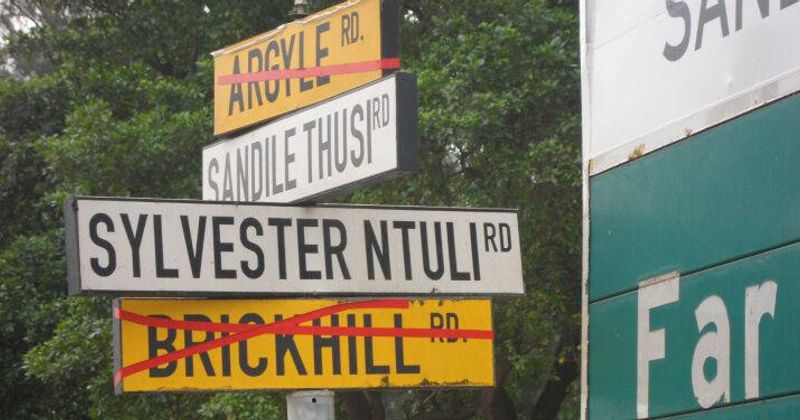
Yet instead of focusing on these core challenges, the government continues with symbolic gestures such as renaming historic towns — for example, changing Graaff-Reinet to Robert Sobukwe Town. These changes, approved on 29 January 2026 by the Minister of Sport, Gayton McKenzie, highlight a deeper problem: the prioritisation of ideology over practical reform. Worse still, this is no longer limited to the ANC alone, but now includes leaders of opposition parties who implement destructive decisions and policy ideas on behalf of the ANC.
South Africa’s tax system is already complex and burdensome, placing the country at risk of losing investors and entrepreneurs. Responding to the crisis by simply raising taxes would therefore result in an exodus of taxpayers — which would, ironically, reduce state revenue.
The path forward is thus clear: cut wasteful spending and implement policies that encourage growth, create jobs and expand the tax base. If the government were to do this, it would directly address the ANC’s stated objectives of reducing unemployment, inequality and poverty. The logic is simple: lower unemployment means more people working; more people working means more taxpayers; and more taxpayers mean more revenue for the state to spend on essential services.
The most important point of all is that the reforms now required would address all these challenges simultaneously. To reduce unemployment, less state intervention is needed — not more. In other words, by doing less and spending less, the state can reduce unemployment. This begins with reducing state-driven red tape and bureaucracy, which would lower government costs while unlocking the potential of the private sector.
Instead, however, the South African government has decided that its primary focus should lie elsewhere: more place-name changes.
The Economic Waste of Renaming
Renaming is not merely symbolic — it is expensive. And the costs extend far beyond consultations and public announcements. Since 2019, the South African Geographical Names Council (SAGNC) alone has cost taxpayers approximately R14 million to operate, excluding the costs associated with Government Gazette publications and signage. Publication in the Government Gazette alone costs between R3,000 and R9,000 per name. For the 103 name changes approved in the Eastern Cape since 2019, no comprehensive cost assessments have been conducted — a glaring failure of fiscal oversight.
Yet these figures represent only the smaller costs.
Historical examples highlight the true scale of the burden. The renaming of 27 streets in Pretoria in 2008 was estimated to cost R800 million, including updates to maps, business materials and infrastructure. In towns such as Graaff-Reinet — which depend heavily on tourism linked to heritage — such changes risk severe economic consequences. As South Africa’s fourth-oldest town, founded in 1786 by the Dutch East India Company, Graaff-Reinet boasts more than 200 national monuments and attracts visitors because of its Afrikaner and colonial history, including the short-lived Cape Free Republic of 1795. Renaming undermines this brand without any proven benefit.
Meanwhile, many affected towns are facing collapse. Debt-ridden municipalities fail to deliver basic services such as water and electricity. In the Eastern Cape, where most recent name changes have occurred, poverty and service interruptions are widespread. Why allocate funds here while infrastructure crumbles? These costs are magnified in a country where 63% of the population lives in poverty — money that could far better be spent on housing, jobs or education.
No Genuine Support — Imposed from Above
These changes are not driven by grassroots demand; they are top-down impositions that disregard public will. In Graaff-Reinet, a 2024 study found that 83.6% of residents opposed the renaming to Robert Sobukwe Town, citing familiarity, history and the urgent need for better services over symbolism. Opposition cut across demographic lines, uniting the community in resistance.
Similar backlash has occurred elsewhere. The renaming of Port Elizabeth to Gqeberha in 2021 sparked petitions with between 32,000 and 40,000 signatures, criticising both the cost and the lack of consultation. In Makhado (formerly Louis Trichardt), low turnout at consultation processes highlighted the disconnect between communities and decision-makers.
Years ago, at a SAGNC workshop, a departmental representative argued that “offensive” names are determined by the majority. I asked how “offensiveness” is defined, especially given the ANC government’s eagerness to rename the main street in Amanzimtoti after Andrew Zondo — an ANC Youth League member who planted a bomb in a shopping centre in 1985, killing five people. The response was that the “majority” would decide whether a name is offensive. Yet within ANC ideology, “the will of the ANC” and “the will of the majority” are treated as synonymous. The same applies to Robert Sobukwe — a historical figure who can hardly be described as uncontroversial.
The SAGNC Act requires community-driven processes, yet changes like these proceed with minimal support. Genuine democracy requires local majorities, cost analyses and evidence of benefit — not central decrees from Pretoria.
A Political Distraction from ANC Failure
Graaff-Reinet’s heritage — founded in 1786, home to the short-lived republic of 1795 and deeply linked to Afrikaner roots — clashes directly with its renaming after PAC founder Robert Sobukwe, an advocate of African self-determination. This is not nation-building; it is erasure, and it risks alienating groups within an already divided society.
Since 1998, more than 1,500 place names have been changed, mostly in Limpopo, Mpumalanga and the Eastern Cape. Yet these changes have deepened division without improving lives. Following electoral losses in 2024, the ANC formed a Government of National Unity to retain power, but this has merely reinforced centralised control. The approval of these changes by McKenzie’s Patriotic Alliance illustrates political co-option, enabling ANC agendas to continue.
The ruling party has demonstrated its inability to govern responsibly. Corruption, service delivery failures and economic stagnation are impossible to ignore. Instead of addressing these realities, the government opts for window dressing — waging a symbolic “war against the past” to divert attention. This strategy mobilises political bases but ignores root causes such as 31.9% unemployment and 63% poverty.
Place-name changes symbolise misplaced priorities. They are costly, unpopular and distract from reforms that could reduce bureaucracy, create jobs and increase revenue. What is needed instead is decentralised power — allowing communities to decide on names and budgets themselves. Growth-focused policies would enable the government to meet its own promises: employment reduces poverty and expands the tax base needed for service delivery.
South Africa can flourish if the economic disease is treated, rather than disguising its symptoms. It is time for freedom-driven policies that empower all citizens.
Lex Libertas is a think tank and advocacy group committed to promoting a viable political dispensation in South Africa – one that does not rely on symbolism and centralisation, but on freedom, responsibility, and self-governance. Our focus is on exposing the real causes of the country’s crisis and advancing practical, principled solutions that enable communities to shape their own future. Those who recognise that South Africa can no longer be sustained through renaming, window-dressing, and ideological gestures, but through meaningful reform and the restoration of community agency, are invited to join Lex Libertas – not merely as observers, but as part of a growing movement working towards something better, more sustainable, and genuinely free.
Click here to sign up as a Lex Libertas contributor.